
 Get a Free Quote
 Home /
How to Choose a Thermal Paper Roll Supplier for Bulk Orders?
Related Posts
How to Choose the Right Adhesive Label Material for Your Application?
Jul 27, 2026
How to Choose Carbonless Paper for Multi-Part Business Forms?
Jul 26, 2026
How Do You Calculate Thermal Paper Roll Length from GSM and Diameter?
Jul 25, 2026
How to Choose Jumbo Thermal Paper Rolls for Slitting and Converting?
Jul 23, 2026
Choosing a thermal paper roll supplier isn't just about finding the lowest price. For importers, wholesalers, and distributors, consistent paper quality, accurate roll dimensions, and dependable delivery can make a significant difference to long-term purchasing costs.
A reliable supplier should offer clear product specifications, suitable material options, sample evaluation, and transparent order terms. Before placing a bulk order, it helps to understand what separates a dependable supplier from one that simply offers an attractive quotation.
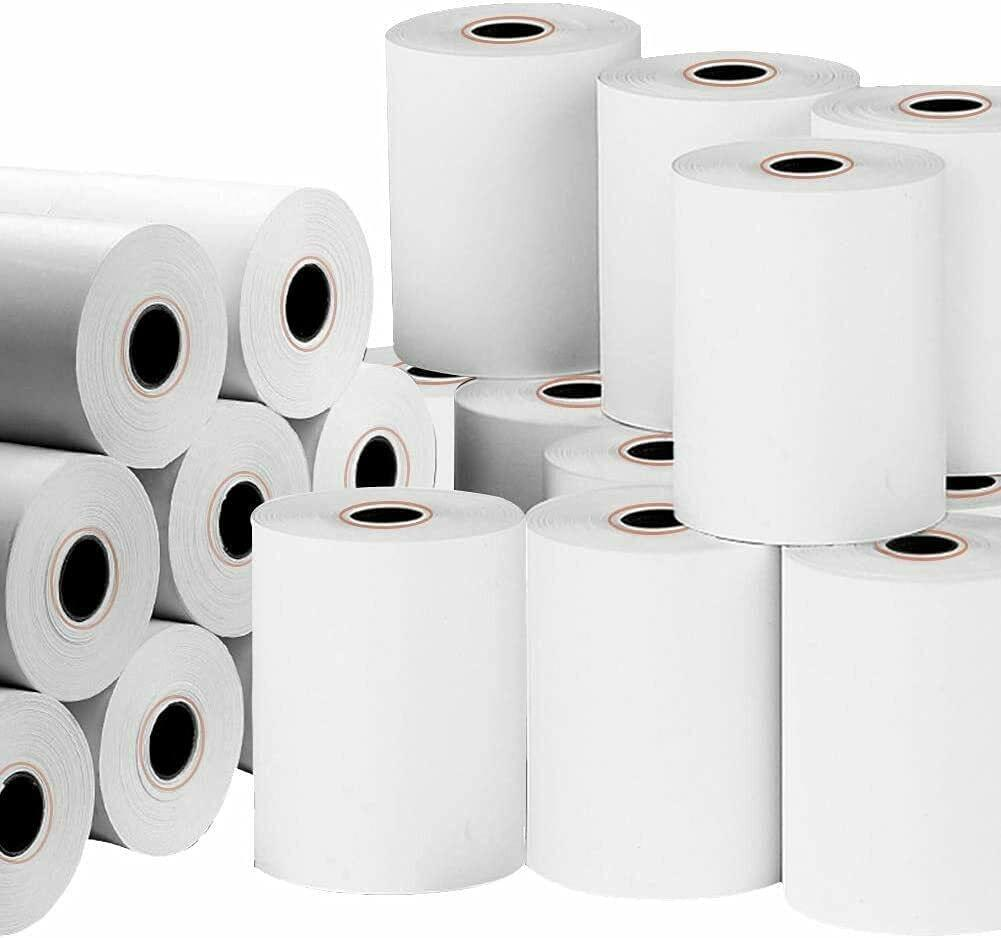
1. Check the Supplier's Product Range and Capabilities
Not every supplier offers the same thermal paper products or processing services.
Some focus on standard POS receipt rolls, while others also supply ATM paper, ticket paper, preprinted rolls, and jumbo rolls for converters.
Start by checking whether the supplier can support your actual purchasing requirements.
For example, a distributor may need several roll widths and carton configurations. A paper converter may require jumbo rolls with specific coating characteristics, widths, and winding specifications.
Ask whether the supplier can provide:
- Standard and custom thermal paper rolls
- Different paper weights and coating grades
- Roll slitting and rewinding
- Custom preprinting and packaging
- Consistent specifications across repeat orders
A supplier with suitable converting capabilities can simplify sourcing, particularly when you purchase several product formats.
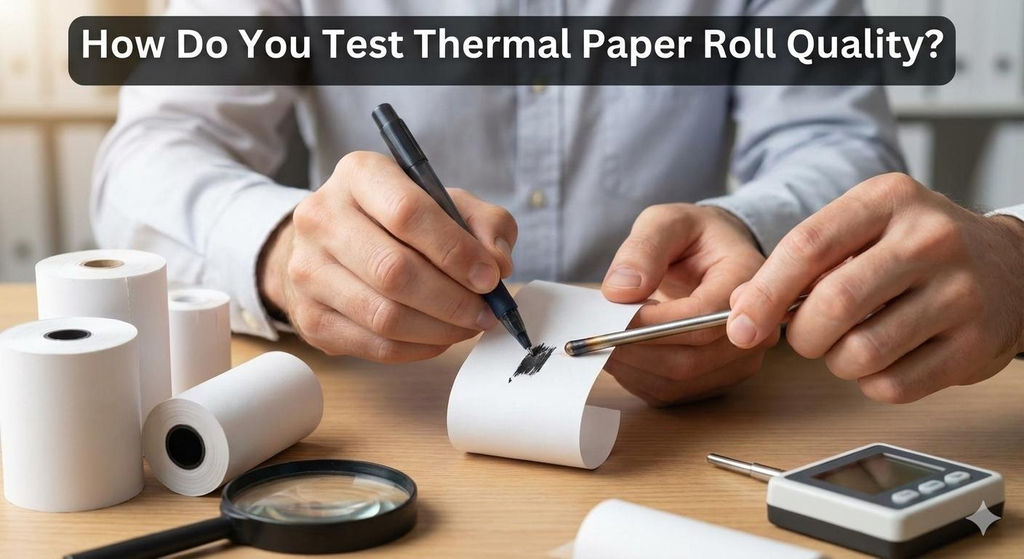
2. Compare Thermal Paper Quality, Not Just GSM
Paper weight is one of the most common specifications buyers compare.
Thermal receipt paper is available in grades such as 48gsm, 55gsm, and 65gsm. However, heavier paper doesn't automatically produce better print quality.
Thermal coating sensitivity, surface smoothness, paper thickness, and compatibility with printer settings also influence printing performance.
When evaluating samples, check for:
- Clear text and barcode printing
- Consistent image density
- Smooth paper feeding
- Limited background discoloration under normal conditions
- Suitable image retention for the intended application
If your business supplies receipts for extended recordkeeping, ask about the selected paper grade's storage and image retention characteristics.
The goal is to find paper that performs consistently in the equipment your customers actually use.
3. Confirm Roll Dimensions and Printer Compatibility
An incorrectly sized paper roll can cause feeding problems even when the paper itself is good quality.
Before requesting a quotation, confirm these specifications:
| Specification | Why It Matters |
|---|---|
| Paper width | Must fit the printer's paper path |
| Outer diameter | Determines whether the roll fits the printer compartment |
| Core diameter | May affect mounting and feeding |
| Paper weight | Influences paper characteristics and roll capacity |
| Roll length | Helps compare actual paper quantity |
| Coating side | Must face the thermal printhead correctly |
| Winding direction | Important for certain printer configurations |
For instance, two suppliers may quote the same nominal 80mm thermal paper roll but provide different paper lengths or weights.
That's why comparing quotations by roll count alone can be misleading.
Whenever possible, provide the printer model and a complete roll specification rather than relying on a general product name.
4. Request Samples Before Committing to a Bulk Order
A sample can reveal issues that aren't obvious from a specification sheet.
It's worth testing the proposed paper in your own printer or in the equipment used by your customers.
During testing, pay attention to print darkness, barcode readability, paper feeding, cutting performance, and visible dust or debris.
For preprinted thermal rolls, also check the position of logos, registration marks, and any fixed text.
If you're ordering several paper grades, compare them under similar printer settings.
For larger orders, ask the supplier whether an approved sample can serve as a reference for subsequent production.
This gives both parties a clearer basis for discussing quality expectations.
5. Evaluate Pricing Based on Actual Paper Quantity
The cheapest quotation isn't always the most economical.
Thermal paper roll prices depend on several factors, including material grade, dimensions, paper length, printing requirements, packaging, and order quantity.
A useful way to compare offers is to calculate the cost per meter of usable paper.
Cost per Meter = Roll Price ÷ Actual Paper Length
For example, a roll priced at $0.60 with 60 meters of paper costs $0.010 per meter.
A $0.55 roll containing only 50 meters costs $0.011 per meter.
In this example, the lower-priced roll is actually more expensive per meter.
For international purchasing, consider freight, customs-related costs, and packaging as part of the total landed cost.
The best supplier isn't necessarily the one with the lowest unit price. It's the one offering suitable material quality and a competitive total purchasing cost.
6. Review Production Capacity and Delivery Arrangements
For distributors managing regular inventory, reliable replenishment matters just as much as the initial shipment.
Ask potential suppliers about their normal production schedules, order confirmation process, and capacity to handle repeat purchases.
Custom-printed products may require additional time for artwork approval, sampling, and production.
It's also useful to clarify whether the quoted lead time includes production only or transportation to the final destination.
Before confirming an order, discuss:
- Estimated production lead time
- Minimum order quantity
- Carton and pallet specifications
- Shipping method and agreed Incoterms
- Required export documentation
- Procedures for resolving shipment or quality issues
Clear expectations help reduce avoidable delays and misunderstandings.
7. Check Material Documentation and Quality Control
Depending on your destination market and customer requirements, material documentation may be an important part of supplier evaluation.
For example, buyers requesting BPA-free thermal paper should confirm that the specific paper grade meets their requirements rather than assuming all thermal paper is BPA-free.
You can also ask how the supplier checks finished roll dimensions, winding consistency, and print performance.
A supplier should be able to explain its quality control process and identify which documents or test results are available for the products being quoted.
Avoid relying entirely on broad claims such as "premium quality" without supporting specifications.
8. Ask the Right Questions Before Placing an Order
Once you've shortlisted potential suppliers, send each one the same specification sheet.
This makes their responses easier to compare.
A practical supplier evaluation checklist includes:
- Can you supply our required roll sizes and paper grades?
- Can we test samples before placing a bulk order?
- What is the MOQ for standard and custom products?
- Are custom printing and private-label packaging available?
- How is the paper length verified?
- What quality checks are performed before shipment?
- What are the production lead times and shipping terms?
Pay attention to how clearly suppliers answer these questions. Accurate technical communication often makes the purchasing process easier.
9. Choosing a Supplier for Long-Term Wholesale Orders
If you purchase thermal paper regularly, look beyond the first transaction.
A good long-term supplier should help you maintain consistent product specifications, coordinate repeat orders, and address quality concerns when they arise.
Mufeng Paper supplies thermal paper rolls for POS terminals, receipt printers, ATMs, and ticketing applications. Available options include different roll dimensions, paper grades, preprinting, and packaging configurations.
Buyers can explore thermal paper rolls or discuss their requirements with the Mufeng Paper team.
Frequently Asked Questions
What should I check before buying thermal paper rolls in bulk?
Confirm the paper grade, roll width, diameter, core size, actual paper length, and printer compatibility. Request samples when practical, and compare quotations using equivalent specifications.
Is 65gsm thermal paper better than 55gsm?
Not necessarily. Higher GSM indicates greater paper mass per square meter, but print quality also depends on the thermal coating, thickness, and printer settings. Choose the grade that suits your application.
Can thermal paper rolls be customized for wholesale orders?
Yes. Depending on supplier capabilities, customization may include roll dimensions, paper grades, preprinted designs, core sizes, and packaging. Confirm availability and MOQ before ordering.
How can I compare thermal paper suppliers fairly?
Provide the same technical requirements to each supplier. Compare material quality, actual roll length, sample performance, order quantities, production schedules, and total landed costs rather than unit prices alone.
Final Thoughts
Choosing a thermal paper roll supplier is easier when you focus on measurable details.
Start with accurate specifications, test suitable samples, and compare pricing based on actual paper quantity. Then evaluate production reliability, shipping arrangements, and communication.
For businesses purchasing thermal paper in bulk, getting these details right can help reduce sourcing problems and support more consistent supply over time.
Looking for custom or wholesale thermal paper rolls?
Contact Mufeng Paper to discuss your paper specifications, estimated order quantity, and packaging requirements.
Share on Social:


Contact Us
In This Article
Show All
Collapse
Related Posts
How to Choose the Right Adhesive Label Material for Your Application?
Jul 27, 2026
How to Choose Carbonless Paper for Multi-Part Business Forms?
Jul 26, 2026
How Do You Calculate Thermal Paper Roll Length from GSM and Diameter?
Jul 25, 2026
How to Choose Jumbo Thermal Paper Rolls for Slitting and Converting?
Jul 23, 2026