
 Get a Free Quote
 Home /
What Specifications Matter When Buying Thermal Paper Rolls in Bulk?
Related Posts
How to Choose the Right Adhesive Label Material for Your Application?
Jul 27, 2026
How to Choose Carbonless Paper for Multi-Part Business Forms?
Jul 26, 2026
How Do You Calculate Thermal Paper Roll Length from GSM and Diameter?
Jul 25, 2026
How to Choose Jumbo Thermal Paper Rolls for Slitting and Converting?
Jul 23, 2026
Buying thermal paper rolls in bulk requires more than choosing a roll width and comparing prices. Two rolls that look identical may contain different paper lengths, use different coatings, or perform differently in the same printer.
For importers, wholesalers, and distributors, the most important specifications include paper width, outer diameter, core size, GSM, roll length, thermal coating, winding direction, and packaging. Confirming these details before ordering helps reduce compatibility problems, inconsistent shipments, and unexpected purchasing costs.
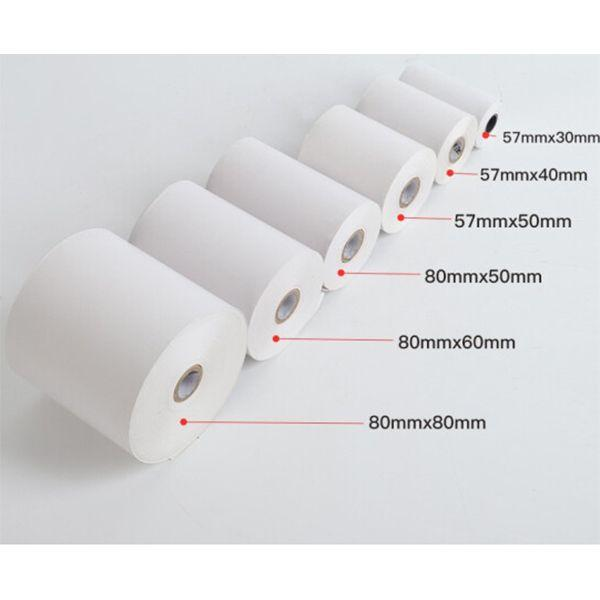
1. Paper Width and Outer Diameter
Paper width and outer diameter are usually the first measurements buyers check.
Width determines whether the paper fits the printer's paper path, while outer diameter determines whether the roll fits inside the printer compartment.
Common formats include:
| Roll Size | Typical Application |
|---|---|
| 57 × 40mm | Compact POS receipt printers |
| 57 × 50mm | Small receipt printing systems |
| 80 × 60mm | POS and receipt printers |
| 80 × 80mm | Retail and commercial receipt printing |
These are common market formats, not universal printer requirements. Always verify dimensions against the intended equipment.
Also, remember that 80 × 80mm normally describes the paper width and roll diameter—not the actual paper length.
2. Paper Weight: 48gsm, 55gsm, or 65gsm?
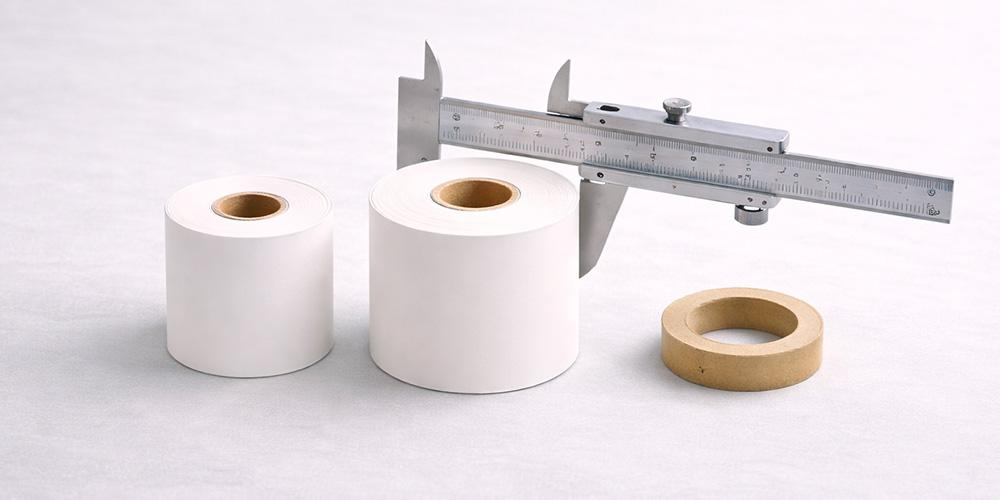
GSM stands for grams per square meter. It indicates paper weight, not directly its thickness or printing quality.
Common thermal paper grades include 48gsm, 55gsm, and 65gsm.
Lighter grades may allow more paper to fit within a fixed roll diameter, depending on actual thickness. Heavier grades often provide a more substantial feel.
However, a higher GSM doesn't automatically mean darker printing or better durability.
For bulk purchasing, ask suppliers to confirm both GSM and paper thickness, especially when roll length is important.
3. Core Size and Winding Direction
Core dimensions are sometimes overlooked, particularly when buyers reorder familiar roll sizes.
A roll may have the correct width and outer diameter but still be unsuitable for a printer because of its core configuration.
Important details include:
- Core inner diameter
- Core outer diameter
- Core material
- Winding direction
- Coated side orientation
Some printers use a spindle, while others support different roll mounting arrangements.
The thermal coating must face the printer's heating elements. Incorrect orientation can result in blank or unreadable receipts.
Always confirm the printer's paper loading requirements before placing a large order.
4. Roll Length and Actual Paper Quantity
Roll length directly affects the number of receipts a business can print before replacing the paper.
Two rolls with identical outer diameters may contain different lengths because of differences in paper thickness, core size, and winding.
For example, an 80mm-wide roll with a thinner paper grade may contain more meters of paper than a roll with thicker stock, assuming the same usable winding space.
This matters when comparing wholesale prices.
Cost per Meter = Roll Price ÷ Actual Roll Length
A supplier offering a lower price per roll may not offer the lowest cost per meter.
For accurate comparison, request the actual roll length or an agreed length tolerance rather than relying on outer diameter alone.
5. Thermal Coating and Print Performance
The thermal coating is responsible for creating an image when exposed to heat from a compatible printer.
Different coating formulations can affect image sensitivity, print density, and resistance to environmental exposure.
For standard retail receipts, clear and consistent printing may be the main requirement.
For applications involving moisture, oils, friction, or longer record retention, a suitable protective coating may be necessary.
Before ordering, consider:
- Print sensitivity and image density
- Barcode readability
- Background discoloration
- Resistance to handling and environmental exposure
- Expected image retention under specified storage conditions
Not every thermal paper grade offers the same level of protection. Request suitable test information where performance is critical.
6. BPA-Free and Material Requirements
Chemical composition may be important when thermal paper is supplied to different international markets.
Buyers sometimes request BPA-free thermal paper or additional documentation relating to restricted substances.
However, BPA-free does not automatically mean free from all bisphenols or other color-developer chemicals.
Ask suppliers to identify the specific paper grade and provide relevant supporting documentation where required.
Material requirements should be confirmed according to the destination market and intended application.
7. Custom Printing and Packaging Specifications
Bulk thermal paper orders may involve more than plain white rolls.
Depending on the supplier's capabilities, customization may include logos, advertisements, fixed text, carton labels, or private-label packaging.
For printed rolls, confirm the artwork layout, printing position, and required approval process.
Packaging details are equally important.
Check the number of rolls per pack, packs per carton, carton dimensions, pallet configuration, and shipping marks.
Consistent packaging specifications make warehouse handling, inventory management, and distribution easier.
8. Bulk Order Specification Checklist
Before sending a purchase order, prepare a complete specification sheet.
| Specification | Information to Confirm |
|---|---|
| Paper Type | Direct thermal paper |
| Paper Width | Required width in mm |
| Outer Diameter | Maximum permitted diameter |
| Core Size | Inner and outer diameter |
| Paper Weight | GSM |
| Paper Thickness | Caliper in microns |
| Roll Length | Meters per roll |
| Thermal Coating | Standard or protective grade |
| Coated Side | Inward or outward |
| Custom Printing | Artwork and printing requirements |
| Packaging | Rolls per carton and pallet details |
| Quantity | Total order quantity and permitted tolerances |
This information helps manufacturers prepare more accurate quotations and reduces the risk of specification misunderstandings.
For repeat orders, an approved specification sheet can also serve as a reference for future shipments.
9. Confirm Specifications Before Mass Production
Even when a supplier offers the correct nominal roll size, sample verification is worthwhile.
Test the paper in the intended printer and check roll fit, feeding performance, image quality, and paper cutting.
For larger orders, agree on dimensional tolerances, packing requirements, and any necessary inspection criteria before production.
Mufeng Paper supplies thermal paper rolls for commercial printing applications, with options for different paper grades, dimensions, preprinting, and packaging.
Buyers sourcing jumbo stock for converting can also explore jumbo paper rolls.
Frequently Asked Questions
What are the most important thermal paper roll specifications?
The main specifications are paper width, outer diameter, core dimensions, GSM, paper thickness, roll length, coating type, and winding direction. Packaging and printing requirements should also be confirmed for bulk orders.
Does 80 × 80mm thermal paper always have the same length?
No. The dimensions normally indicate width and outer diameter. Actual paper length depends on thickness, core size, and winding characteristics.
Is higher GSM always better for thermal paper?
No. Higher GSM indicates greater paper weight per square meter, but print quality depends on coating performance, smoothness, printer settings, and other material properties.
Why should buyers request paper samples before bulk production?
Samples help verify printer compatibility, feeding performance, image clarity, and product dimensions before committing to a larger quantity.
Final Thoughts
Accurate specifications are the foundation of successful bulk thermal paper purchasing.
By confirming roll dimensions, paper grade, coating performance, actual length, and packaging requirements, buyers can compare quotations more fairly and reduce costly ordering mistakes.
Need thermal paper rolls manufactured to your specifications?
Contact Mufeng Paper with your required dimensions, GSM, paper grade, and estimated order quantity to discuss suitable bulk supply options.
Share on Social:


Contact Us
In This Article
Show All
Collapse
Related Posts
How to Choose the Right Adhesive Label Material for Your Application?
Jul 27, 2026
How to Choose Carbonless Paper for Multi-Part Business Forms?
Jul 26, 2026
How Do You Calculate Thermal Paper Roll Length from GSM and Diameter?
Jul 25, 2026
How to Choose Jumbo Thermal Paper Rolls for Slitting and Converting?
Jul 23, 2026