
 Get a Free Quote
 Home /
What Is the Difference Between 55gsm and 65gsm Thermal Paper?
Related Posts
How to Choose the Right Adhesive Label Material for Your Application?
Jul 27, 2026
How to Choose Carbonless Paper for Multi-Part Business Forms?
Jul 26, 2026
How Do You Calculate Thermal Paper Roll Length from GSM and Diameter?
Jul 25, 2026
How to Choose Jumbo Thermal Paper Rolls for Slitting and Converting?
Jul 23, 2026
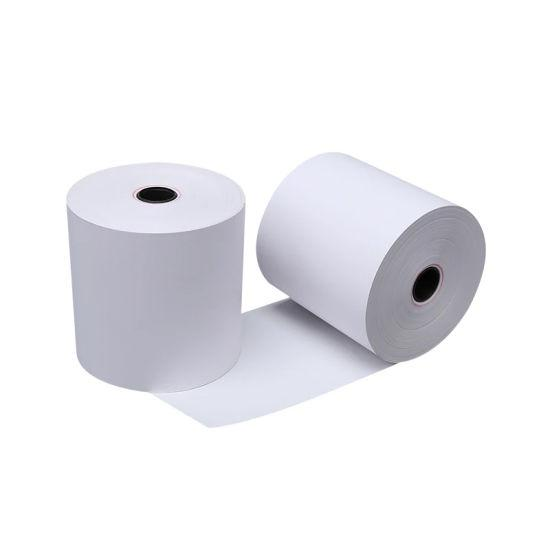
When buying thermal paper rolls, you'll often see options such as 55gsm and 65gsm. At first glance, the rolls may look almost identical. But the difference in paper weight can affect how the paper feels, how much fits on a roll, and what you pay for each printed receipt.
The main difference is that 65gsm thermal paper weighs approximately 18% more per square meter than 55gsm paper. It generally has a more substantial feel, while 55gsm is often preferred for everyday receipt printing where roll length and cost efficiency matter.
However, heavier paper doesn't automatically mean better printing. Here's what buyers should know before choosing.
1. What Does GSM Mean in Thermal Paper?
GSM stands for grams per square meter. It measures the weight of one square meter of paper, including its coating.
For example:
- 55gsm thermal paper: One square meter weighs approximately 55 grams.
- 65gsm thermal paper: One square meter weighs approximately 65 grams.
That is a difference of 10 grams per square meter.
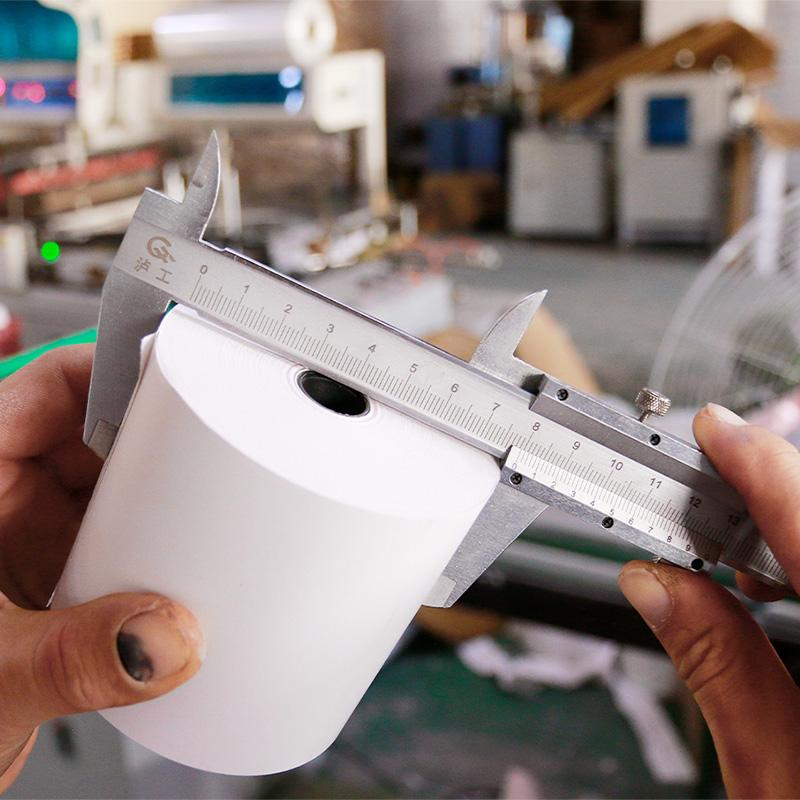
GSM is not the same as thickness. Paper thickness, also called caliper, is measured in microns (μm).
Although heavier paper is often thicker within a comparable product range, the actual thickness depends on the base paper and coating construction.
This distinction becomes important when calculating roll length or checking printer compatibility.
2. 55gsm vs 65gsm Thermal Paper: Quick Comparison
| Feature | 55gsm Thermal Paper | 65gsm Thermal Paper |
|---|---|---|
| Paper weight | 55 g/m² | 65 g/m² |
| Typical feel | Lighter, more flexible | More substantial, often stiffer |
| Thickness | Generally lower within a comparable grade range | Generally higher within a comparable grade range |
| Roll length | Often longer at the same outer diameter | Often shorter at the same outer diameter |
| Print quality | Depends on thermal coating | Depends on thermal coating |
| Material usage | Less paper mass per square meter | More paper mass per square meter |
| Typical application | Everyday POS receipts | Receipts requiring a heavier paper feel |
These are general comparisons. Individual paper grades may differ depending on their construction and manufacturer.
3. Does 65gsm Thermal Paper Print Better?
Not necessarily.
The darkness and clarity of thermal printing depend mainly on the heat-sensitive coating, paper surface, and printer settings.
A well-manufactured 55gsm thermal paper can produce clearer receipts than a poorly coated 65gsm grade.
When testing printing performance, consider:
- Text sharpness and image density
- Barcode readability
- Coating sensitivity
- Background discoloration
- Print consistency across the roll
If both grades use comparable thermal coatings, their print results may be very similar.
For bulk purchasing, it's more useful to test samples than to judge printing quality by GSM alone.
4. How Does GSM Affect Thermal Paper Roll Length?
This is one of the most important differences for wholesale buyers.
When two finished rolls have the same width, outer diameter, and core size, the grade with greater paper thickness generally contains fewer meters of paper.
For example, a roll made with 65gsm paper may contain less paper than an otherwise identical roll made with 55gsm stock.
However, GSM alone cannot determine the exact roll length.
The actual length also depends on:
- Paper thickness
- Core diameter
- Finished roll diameter
- Winding characteristics
If you're comparing 80 × 80mm thermal paper rolls, ask for the actual paper length in meters rather than assuming that identical roll dimensions mean identical quantities.
5. Which GSM Is More Cost-Effective?
The answer depends on how the paper will be used.
55gsm thermal paper generally requires less material mass for the same printed area. This can make it attractive for high-volume receipt printing.
65gsm paper uses more material per square meter, which may increase the material component of the price.
However, the final quotation also depends on coating grade, manufacturing conditions, printing, packaging, and order quantity.
For buyers, cost per usable meter is often a more meaningful comparison than price per roll.
Cost per Meter = Price per Roll ÷ Actual Roll Length
A lower-priced roll is not necessarily better value if it contains significantly less paper.
When comparing quotations, make sure the paper grade, roll dimensions, and length specifications are consistent.
6. Which Grade Is Better for POS Receipt Printers?
For many everyday retail receipt applications, 55gsm is a practical option because it balances paper weight and roll capacity.
65gsm may be preferred when buyers want a heavier-feeling receipt or when the application involves more frequent document handling.
But printer compatibility should come first.
Check the equipment manufacturer's supported paper thickness and media specifications before switching grades.
A compact portable printer may have different paper requirements from a larger countertop POS printer.
If you're supplying several printer models, test both paper grades before standardizing your inventory.
7. Does 65gsm Thermal Paper Last Longer?
A heavier sheet may offer a different handling feel, but GSM does not independently determine how long printed information remains readable.
Thermal image retention depends on coating chemistry, protective layers, exposure conditions, and storage practices.
For example, exposure to heat, sunlight, oils, or incompatible chemicals can damage thermal images regardless of paper weight.
If long-term readability matters, ask about the paper's image retention characteristics and environmental resistance rather than choosing 65gsm solely because it is heavier.
A suitable top-coated grade may provide better protection for certain applications, depending on its tested performance.
8. What Should Wholesale Buyers Choose?
Before choosing between 55gsm and 65gsm thermal paper, consider three questions.
How will the paper be used?
For everyday receipts that are printed and handled briefly, 55gsm may be sufficient. If a heavier paper feel is important, 65gsm may be worth evaluating.
What do your printers support?
Verify paper thickness, roll diameter, and printer specifications. Don't assume that every POS printer works equally well with both grades.
What is the actual cost per meter?
Compare quotations using confirmed paper length, coating grade, and finished roll dimensions.
Mufeng Paper offers thermal paper rolls for commercial receipt printing, with different paper grades, roll dimensions, and customization options.
For companies purchasing paper for slitting and converting, jumbo paper rolls are another sourcing option.
Frequently Asked Questions
Is 65gsm thermal paper thicker than 55gsm?
Generally, 65gsm paper is thicker within comparable product constructions. However, thickness also depends on the base paper and coatings. Check the actual caliper in microns for accurate comparison.
Does 55gsm thermal paper produce lighter printing?
Not necessarily. Print darkness depends primarily on coating sensitivity and printer settings, rather than paper weight alone.
Which thermal paper is better for high-volume receipts?
55gsm is often a practical choice for high-volume POS printing because it may provide more paper length within the same finished roll diameter. Always confirm actual roll length and printer compatibility.
Can I use 65gsm thermal paper instead of 55gsm?
Possibly, provided the paper thickness and other specifications meet the printer's requirements. Test the alternative grade before placing a bulk order.
Final Thoughts
The choice between 55gsm and 65gsm thermal paper is not simply about which one is thicker or more expensive.
55gsm often makes sense when paper efficiency and routine receipt printing are priorities. 65gsm can be suitable when a heavier paper feel is preferred.
For bulk buyers, the best decision comes from comparing paper thickness, coating quality, printer compatibility, actual roll length, and total purchasing costs.
Need 55gsm or 65gsm thermal paper rolls for wholesale orders?
Contact Mufeng Paper with your required paper grade, roll dimensions, packaging specifications, and estimated quantity to discuss available options.
Share on Social:


- PREV: Null
- NEXT: How to Choose the Right Thermal Paper Roll Size for POS Printers?
Contact Us
In This Article
Show All
Collapse
Related Posts
How to Choose the Right Adhesive Label Material for Your Application?
Jul 27, 2026
How to Choose Carbonless Paper for Multi-Part Business Forms?
Jul 26, 2026
How Do You Calculate Thermal Paper Roll Length from GSM and Diameter?
Jul 25, 2026
How to Choose Jumbo Thermal Paper Rolls for Slitting and Converting?
Jul 23, 2026