
 Get a Free Quote
  Home /
The “Invisible Evolution” of Carbonless Paper: How Microcapsule Technology Improves Copy Clarity and Durability
Related Posts
Complete Guide to Thermal Paper – From Principle to Selection, Everything You Need to Know
Jul 27, 2026
Direct Thermal vs. Thermal Transfer Labels – How to Choose? A Quick Comparison
Jul 27, 2026
Carbonless Paper User Guide – What to Do When Copies Are Faint or Jams Occur?
Jul 27, 2026
Thermal Paper and Carbonless Paper — The “Invisible Essentials” of Office Applications Are Evolving
Jul 27, 2026
Since carbonless copy paper became commercially available in the 1950s, it has remained an important consumable for banking documents, logistics waybills, contracts, financial vouchers, and multi-part business forms. Although carbonless paper may look like ordinary paper, its performance depends on a sophisticated microcapsule-based image-forming system.
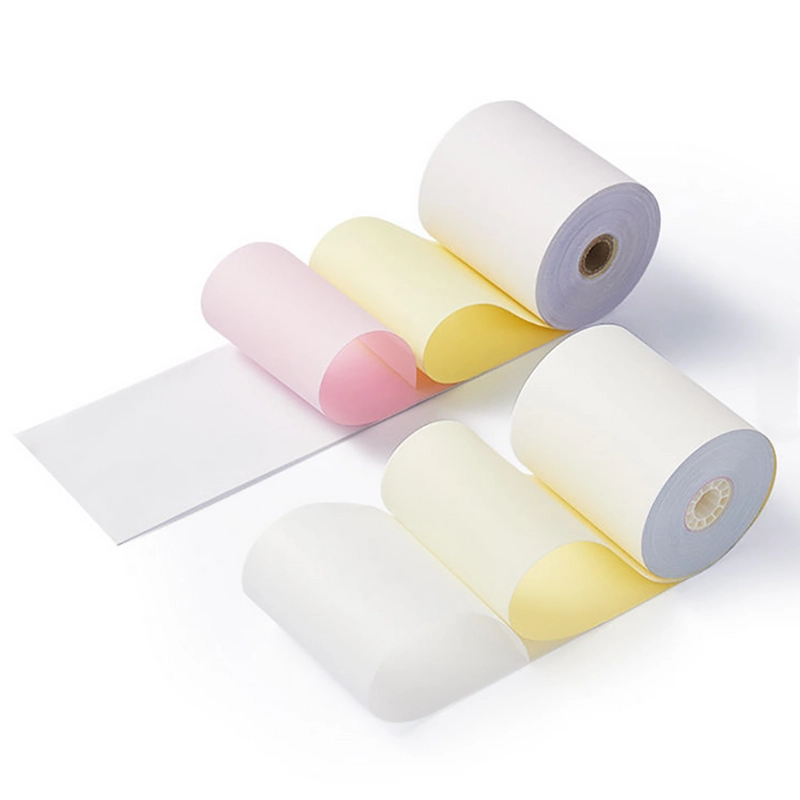
In a typical carbonless paper structure, colorless dye precursors are dissolved in a carrier oil and enclosed inside microscopic polymer capsules. When pressure is applied through handwriting, impact printing, or mechanical contact, the microcapsules rupture. The released dye precursor then reacts with a developer coating on the receiving sheet, creating a visible copy without the need for carbon sheets or ribbons.While this technology has been used for decades, carbonless paper continues to evolve in microcapsule stability, image uniformity, archival performance, and environmental compatibility.
Improved Microcapsule Stability
One of the key technical challenges in carbonless paper is maintaining microcapsule integrity during transportation, stacking, and storage while still allowing the capsules to rupture reliably under writing or printing pressure.
Modern coating development therefore places greater emphasis on protective layers, barrier structures, and optimized capsule-wall design. These improvements can reduce the effects of humidity, friction, localized pressure, and oxidation, helping to minimize premature coloration, staining, or background discoloration during storage.Better protection of developed image areas can also reduce fading, dye migration, and edge blurring over time, improving both document readability and archival stability.
From Visible Copies to Consistent Multi-Part Image Quality
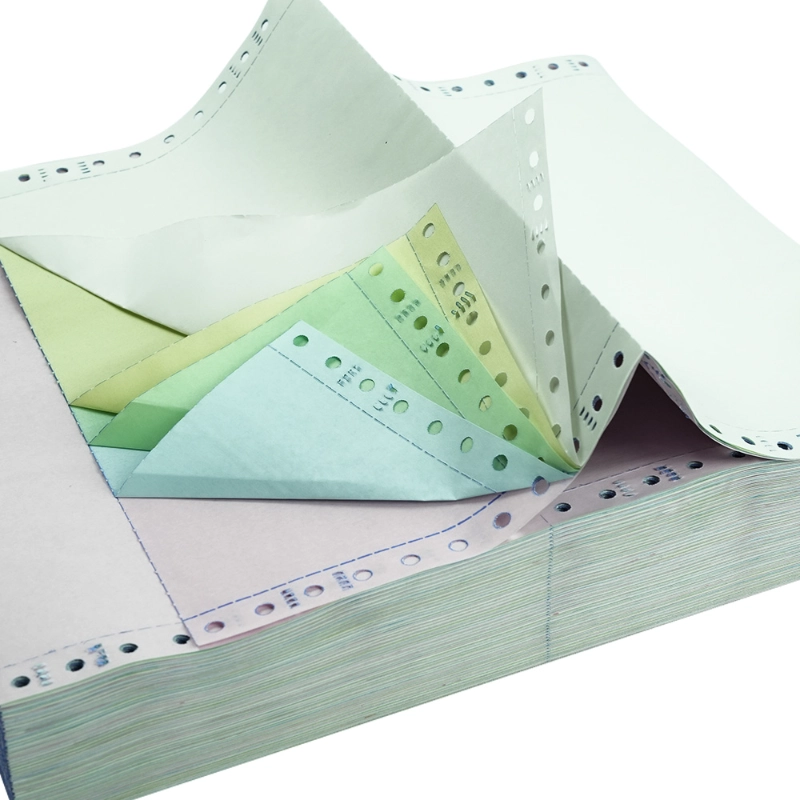
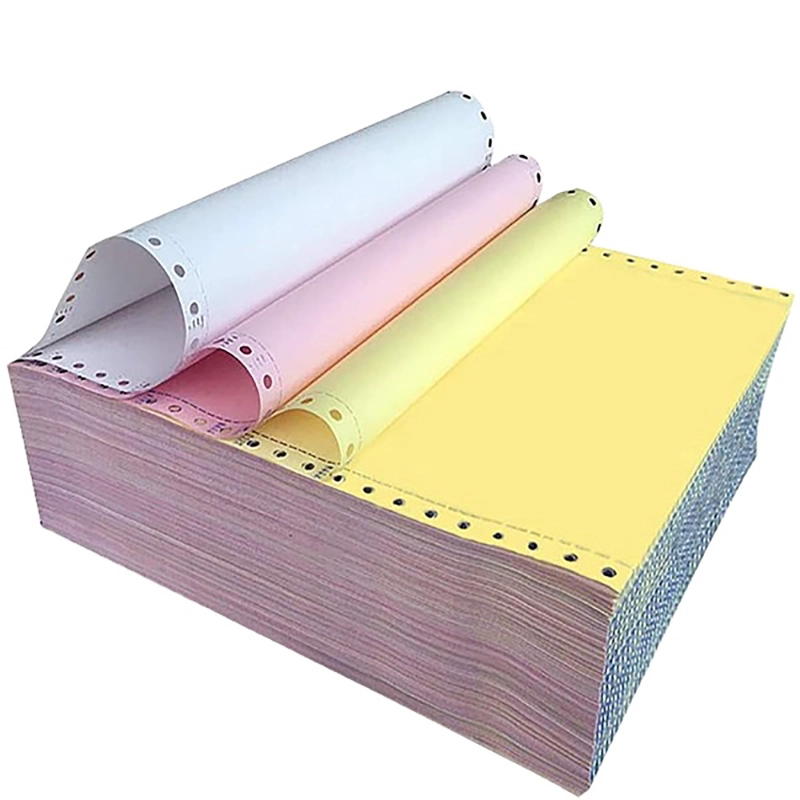
For multi-part carbonless forms, good performance is not simply about whether the first copy is readable. The more important question is whether sufficient pressure and image density can still be transferred to the lower plies.
Modern carbonless paper therefore focuses on several key variables:
- Controlled microcapsule size for more uniform rupture under pressure;
- Consistent capsule distribution to reduce weak or uneven image areas;
- Uniform coating weight for improved color consistency;
- Efficient developer chemistry for better response at lower pressure;
- Lightfastness and archival stability to preserve readability over time.
Some recent research has also explored functional inorganic materials and surface-modification technologies to improve developer-layer structure, color density, light resistance, and image stability.
The size of the microcapsules and their distribution per unit area can directly affect pressure sensitivity and copy uniformity, making these parameters important indicators in coating-process quality control.
Greener Microcapsule Systems Are Becoming a New Development Direction
As environmental requirements for office paper increase, carbonless paper development is also moving beyond better image quality toward more sustainable coating chemistry.
The industry is exploring safer carrier systems, water-based coatings, lower-VOC production processes, and developer materials that are easier to manage during recycling. By reducing the use of highly volatile solvents and optimizing coating chemistry, manufacturers can lower the environmental impact of production and end-of-life processing without sacrificing copy performance.
For large companies and international buyers, this is also changing how carbonless paper is evaluated. In addition to image clarity, factors such as base-paper sourcing, coating chemistry, environmental declarations, and recyclability are becoming increasingly relevant in supplier assessments.
For Office Applications, Technical Progress Ultimately Means More Reliable Documents
End users may never see the microcapsules themselves, but the benefits are highly practical: clearer copies from the first ply to the last, better consistency between copies, improved archival performance, and less need for manual verification or document re-entry.
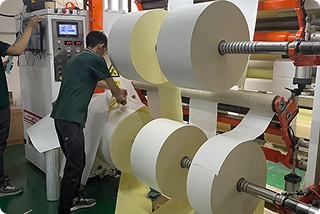
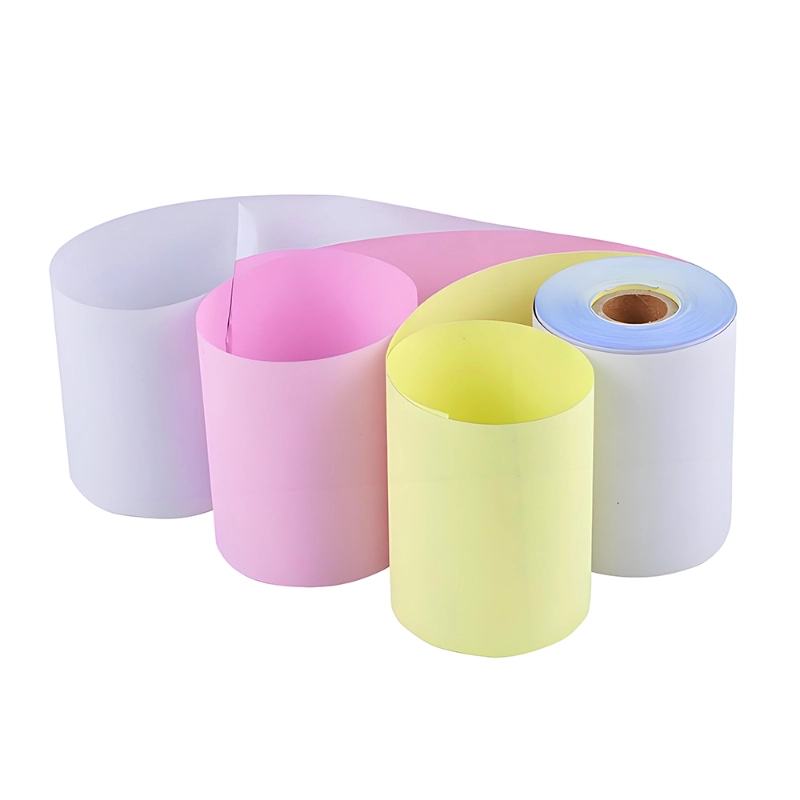
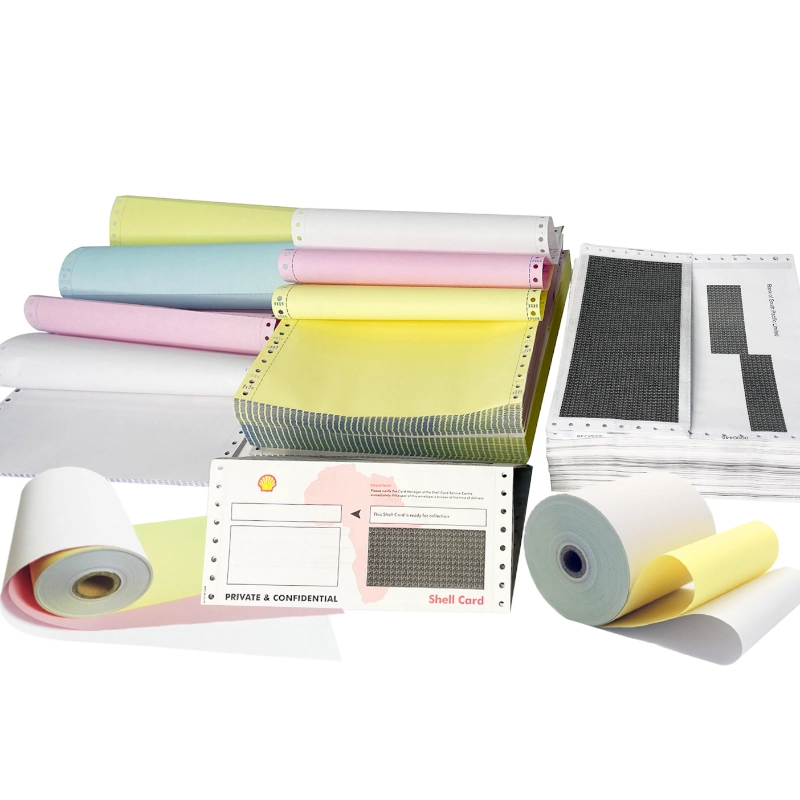
Mufeng Paper supplies carbonless paper rolls made with quality base paper and a stable microcapsule coating system, with particular attention to pressure sensitivity, multi-ply image consistency, and reliable paper feeding. Products can be customized in 1- to 6-part configurations, with flexible color combinations for different plies.
Whether used for bank documents, logistics waybills, financial vouchers, or general business forms, stable microcapsule coatings and consistent paper quality help keep every copy clear and readable, providing more reliable physical records for verification, archiving, and long-term traceability.
Share on Social:


Contact Us
In This Article
Related Posts
Complete Guide to Thermal Paper – From Principle to Selection, Everything You Need to Know
Jul 27, 2026
Direct Thermal vs. Thermal Transfer Labels – How to Choose? A Quick Comparison
Jul 27, 2026
Carbonless Paper User Guide – What to Do When Copies Are Faint or Jams Occur?
Jul 27, 2026
Thermal Paper and Carbonless Paper — The “Invisible Essentials” of Office Applications Are Evolving
Jul 27, 2026