
 Get a Free Quote
  Home /
The Green Revolution in Thermal Paper: From Bisphenol Developers to Lignin-Based Materials
Related Posts
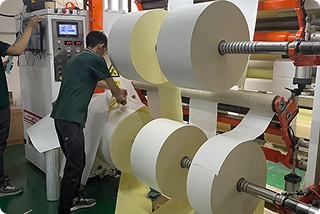
Complete Guide to Thermal Paper – From Principle to Selection, Everything You Need to Know
Jul 27, 2026
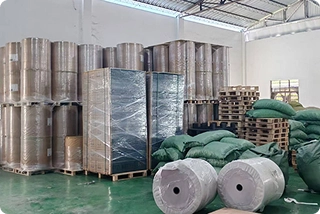
Direct Thermal vs. Thermal Transfer Labels – How to Choose? A Quick Comparison
Jul 27, 2026
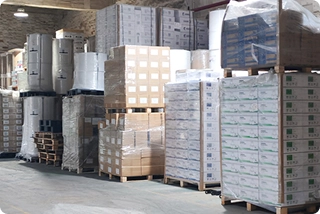
Carbonless Paper User Guide – What to Do When Copies Are Faint or Jams Occur?
Jul 27, 2026
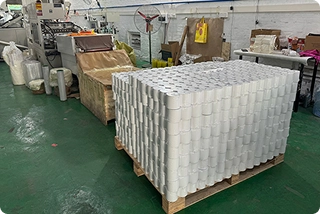
Thermal Paper and Carbonless Paper — The “Invisible Essentials” of Office Applications Are Evolving
Jul 27, 2026
Lignin-Based Thermal Paper: A New Path Beyond BPA

Thermal paper is widely used for POS receipts, food-delivery orders, logistics labels, self-service terminals, tickets, and medical records. However, concerns around conventional developers such as BPA and some substitutes have increased demand for safer and more sustainable thermal coating technologies. In 2026, EPFL researchers reported a new approach in Science Advances using specially processed lignin as a developer and diformylxylose, derived from plant-cell-wall xylan, as a sensitizer.
The lignin-based formulation produced clear thermal images with commercially relevant color density and encouraging storage stability. Safety testing also showed substantially lower estrogen-like activity than BPA, while the plant-derived sensitizer did not show a comparable estrogenic or toxicity profile under the tested conditions. Further work is still needed to improve print contrast and support industrial-scale production.
From Laboratory Research to Commercial Phenol-Free Thermal Paper
At the same time, commercially available phenol-free and alternative thermal technologies are continuing to expand.
Koehler Paper's Blue4est® Pro uses a physical image-forming mechanism rather than conventional chemical developers. In 2025, the material successfully completed testing and certification for Toshiba Tec Singapore's TRST-L1 multifunction linerless printer, supporting applications such as linerless labels.
Lecta also offers phenol-free products within its Termax thermal paper portfolio, with product information referencing Ineris “No Phenols Added” certification. This illustrates how phenol-free thermal technologies are moving beyond research concepts into established commercial supply.
The thermal paper industry is therefore developing along two parallel paths. Existing phenol-free systems are reducing reliance on conventional bisphenol developers, while research into lignin, plant-derived sugars, and other biomass-based materials is opening new possibilities for the next generation of thermal coatings.
What Does This Mean for the Office Paper Market?
For office paper buyers, chemical compliance and material transparency are becoming increasingly important alongside conventional printing performance.
For retail, logistics, healthcare, and international supply-chain customers, thermal paper procurement is therefore increasingly likely to consider not only image clarity, storage life, and resistance to water or oil, but also base-paper sourcing, coating chemistry, material declarations, and environmental compliance documentation.
According to the product information provided, Mufeng Paper is advancing phenol-free formulations across its thermal paper offering while combining quality base paper with environmentally responsible coating systems. Its thermal paper can also be configured with water, oil, and abrasion resistance, supporting demanding applications such as POS receipts and logistics labels without sacrificing practical print performance.
From conventional bisphenol developers to phenol-free systems and emerging lignin- and plant-sugar-based technologies, thermal paper is undergoing more than a simple formulation change. It is part of a broader technological transition focused on chemical safety, print performance, and sustainable materials.
For the office paper industry, the next generation of competitive thermal paper may therefore be defined not simply by how clearly it prints, but by how effectively it combines reliable performance with safer, more transparent, and more sustainable material choices.
Share on Social:


Contact Us
In This Article
Related Posts
Complete Guide to Thermal Paper – From Principle to Selection, Everything You Need to Know
Jul 27, 2026
Direct Thermal vs. Thermal Transfer Labels – How to Choose? A Quick Comparison
Jul 27, 2026
Carbonless Paper User Guide – What to Do When Copies Are Faint or Jams Occur?
Jul 27, 2026
Thermal Paper and Carbonless Paper — The “Invisible Essentials” of Office Applications Are Evolving
Jul 27, 2026