
 Get a Free Quote
  Home /
Subtraction and Addition in Labels: How Linerless and Smart Labels Are Reshaping the Industry
Related Posts
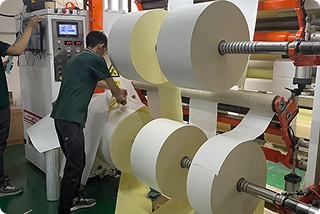
Complete Guide to Thermal Paper – From Principle to Selection, Everything You Need to Know
Jul 27, 2026
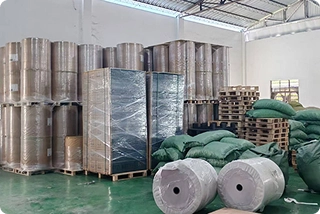
Direct Thermal vs. Thermal Transfer Labels – How to Choose? A Quick Comparison
Jul 27, 2026
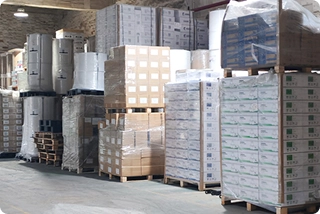
Carbonless Paper User Guide – What to Do When Copies Are Faint or Jams Occur?
Jul 27, 2026
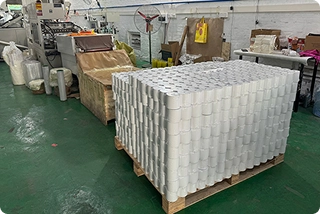
Thermal Paper and Carbonless Paper — The “Invisible Essentials” of Office Applications Are Evolving
Jul 27, 2026
The Future of Labels: Less Material, More Functionality
The label industry is developing along two different but complementary innovation paths. One is about subtraction—removing the release liner to reduce material consumption. The other is about addition—introducing durability, monitoring, and variable-data functions so that labels can perform more tasks throughout the supply chain.
This shift means that labels are no longer simply carriers for product names, barcodes, and prices. They are increasingly becoming important links between physical products, equipment, and digital supply-chain systems.
Subtraction: Linerless Labels Reduce Materials and Waste
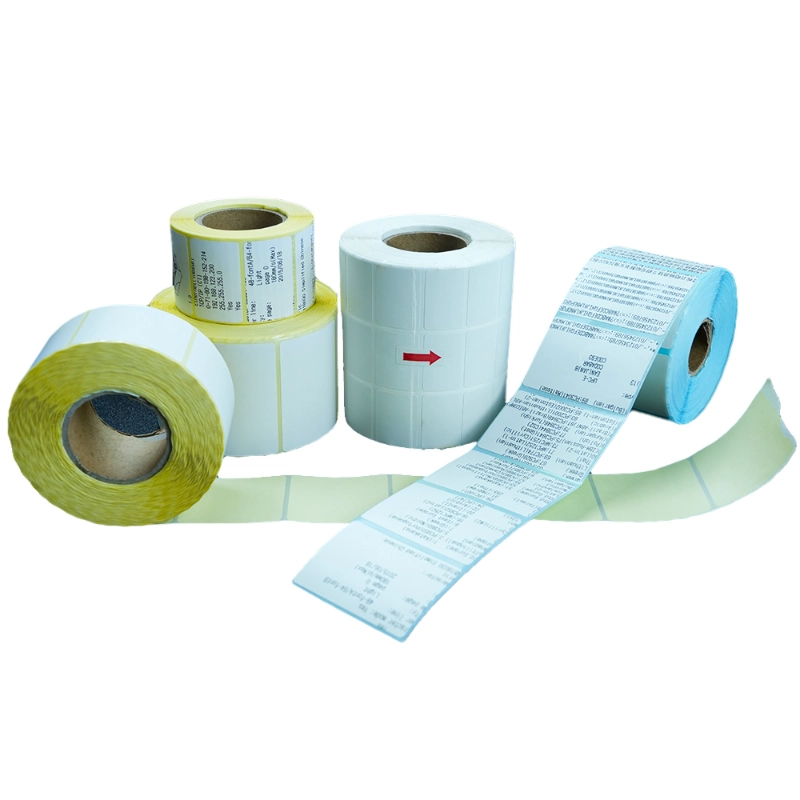
Traditional labels consist of a face material, adhesive, and release liner. After application, the liner is discarded, adding material and disposal costs.
Linerless labels eliminate the liner by applying a release coating to the face and a compatible adhesive on the reverse, enabling direct roll winding without backing paper. During printing, the label is cut to the required length and applied immediately.
Compared with conventional label rolls, linerless structures can provide several operational advantages:
- Reduced consumption and disposal of release liners;
- More usable label material within a similar roll diameter;
- Fewer roll changes in high-volume printing operations;
- Less storage and handling of discarded backing paper;
- Flexible label lengths depending on the amount of information required.
Linerless systems can significantly cut material use. Suppliers and printer manufacturers are increasingly supporting these solutions, moving them toward broader commercial adoption—particularly in food retail, takeaway packaging, logistics sorting, and weighing labels, where reduced liner waste and fewer roll changes offer clear practical benefits.
Addition: Labels Are Taking on More Functions
The second path adds capabilities to conventional labels, extending their role from static displays to environmental indication, durable identification, traceability, and dynamic data management.
Indicator technologies can monitor exposure to temperature or other conditions—valuable for cold-chain and pharmaceutical logistics. Thermal transfer printing with durable facestocks or laminates improves resistance to moisture, abrasion, oils, and chemicals, making labels suitable for warehouses, industrial equipment, and outdoor assets.
Variable Data Printing further combines pre-printed branding with on-demand batch numbers, dates, serial numbers, and logistics codes. A single label thus integrates branding, identification, and dynamic data management.
Labels Are Becoming Information Nodes in the Supply Chain
Removing liners and adding functionality may appear to be opposite directions, but both address the same underlying requirement: carrying more accurate and reliable information with more efficient use of materials.
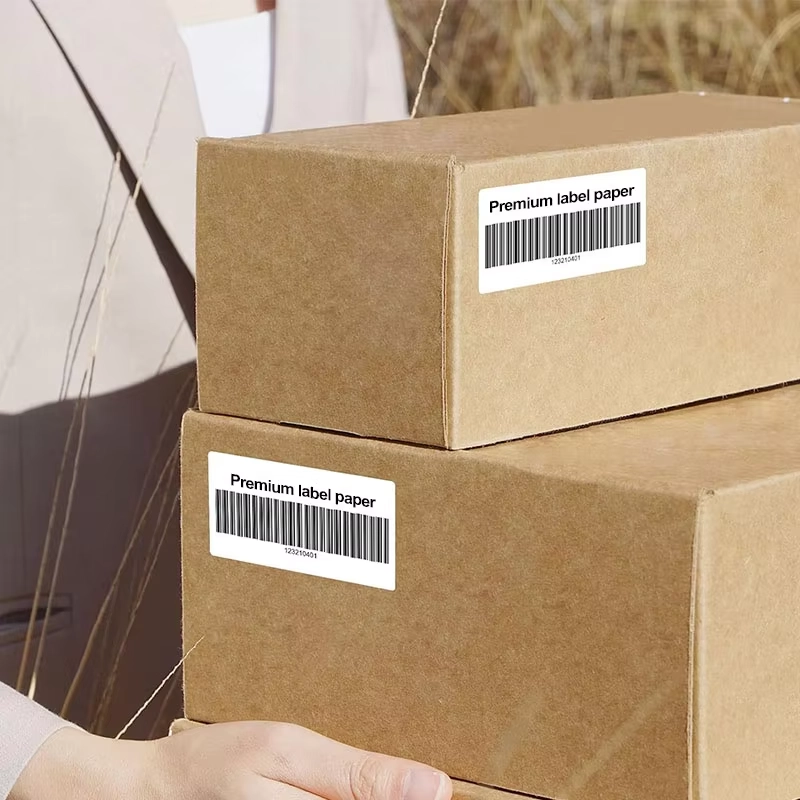
As ERP, WMS, TMS, and asset-management systems become more widely adopted, barcodes, QR codes, batch numbers, and serial numbers printed on labels are directly involved in inventory, logistics, and traceability workflows.
If a label peels off, curls, becomes scratched, or can no longer be scanned, the problem is no longer limited to a damaged sticker. It can also affect scanning operations, inventory records, and supply-chain tracking.
Label selection therefore increasingly requires buyers to evaluate printing technology, face material, adhesive type, operating temperature, chemical exposure, and required information lifespan together.
Mufeng Paper: Matching Label Materials to Real Applications
For Mufeng Paper customers, label selection is increasingly about identifying the right material combination for a specific operating environment rather than simply choosing a label type.
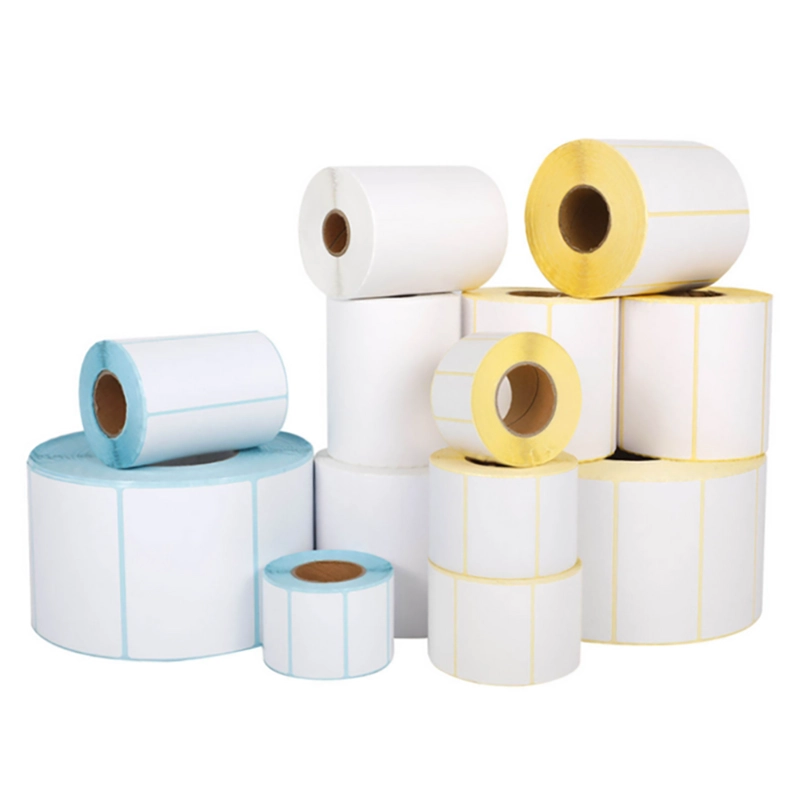
Mufeng's direct thermal labels require no ribbon and are suitable for logistics circulation, supermarket weighing, retail pricing, and other high-volume applications where information needs to remain readable for a relatively short period.
Thermal transfer labels are better suited to applications requiring greater abrasion resistance, environmental durability, and longer information retention, including electronic component tracking, medical sample identification, warehouse management, and outdoor asset labeling.
Different operating conditions can also be matched with suitable material options:
- Adhesives: standard-temperature, low-temperature, and high-temperature adhesives;
- Face materials: coated paper, synthetic paper, PET, and other substrates;
- Environments: general warehousing, cold-chain logistics, high temperatures, oily or humid conditions, and long-term identification.
Direct thermal and thermal transfer technologies are therefore not simple substitutes for each other. Each has advantages depending on printing cost, required information lifespan, and environmental durability.From using less unnecessary material to giving each label more useful functionality, the industry is redefining the value of a label. Future competition will not be determined solely by material cost per square meter, but by how effectively suppliers balance material structure, printing technology, cost, operational efficiency, durability, and sustainability.
Share on Social:


Contact Us
In This Article
Related Posts
Complete Guide to Thermal Paper – From Principle to Selection, Everything You Need to Know
Jul 27, 2026
Direct Thermal vs. Thermal Transfer Labels – How to Choose? A Quick Comparison
Jul 27, 2026
Carbonless Paper User Guide – What to Do When Copies Are Faint or Jams Occur?
Jul 27, 2026
Thermal Paper and Carbonless Paper — The “Invisible Essentials” of Office Applications Are Evolving
Jul 27, 2026