
 Get a Free Quote
  Home /
Computer Forms and Labels — Evolving from Printing Consumables into Data Entry Points
Related Posts
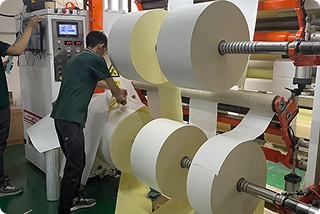
Complete Guide to Thermal Paper – From Principle to Selection, Everything You Need to Know
Jul 27, 2026
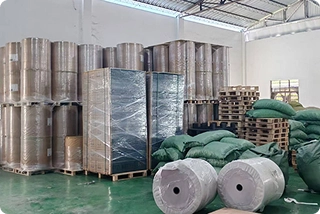
Direct Thermal vs. Thermal Transfer Labels – How to Choose? A Quick Comparison
Jul 27, 2026
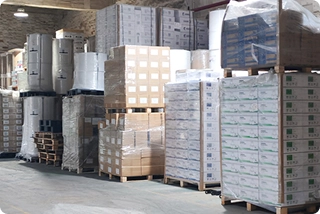
Carbonless Paper User Guide – What to Do When Copies Are Faint or Jams Occur?
Jul 27, 2026
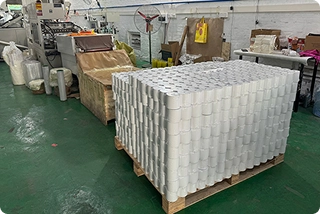
Thermal Paper and Carbonless Paper — The “Invisible Essentials” of Office Applications Are Evolving
Jul 27, 2026
Computer Forms for Modern Logistics and Smart Warehousi
Computer forms, also known as continuous computer paper, were once standard consumables for office and document printing. Despite the continued adoption of digital workflows, they remain difficult to replace in applications such as courier waybills, warehouse picking lists, financial vouchers, logistics documents, and multi-part business forms.
Their value goes beyond multi-part copying. Key performance factors such as continuous paper feeding, sprocket-hole accuracy, perforation precision, and copy consistency can directly affect printer reliability and the efficiency of downstream business processes.
As e-commerce logistics and smart warehousing continue to expand, demand for computer forms is shifting from standard formats toward more application-specific customization. Different warehouse systems may require customized paper widths, ply counts, sprocket-hole spacing, copy colors, or binding structures.
In medium and large distribution centers, high-speed continuous printing is common. Even minor deviations in sprocket-hole positioning or paper dimensions can lead to paper misalignment, printing displacement, or difficulties in reading critical information such as barcodes and order numbers.
For this reason, purchasing decisions increasingly focus on:
- Accurate sprocket-hole positioning for reliable tractor-feed printing;
- Stable continuous feeding to reduce misalignment and paper jams;
- Reliable multi-part binding during high-speed printing;
- Consistent perforation quality for clean and easy separation;
- Uniform copy density to keep lower copies clear and readable.
For logistics, express delivery, and financial applications, these details can directly influence document-processing efficiency as well as scanning, verification, archiving, and traceability.
Direct Thermal and Thermal Transfer Labels: Different Technologies for Different Service Lives
At the same time, labels are evolving from simple information carriers into the “digital identity” of products moving through modern supply chains.
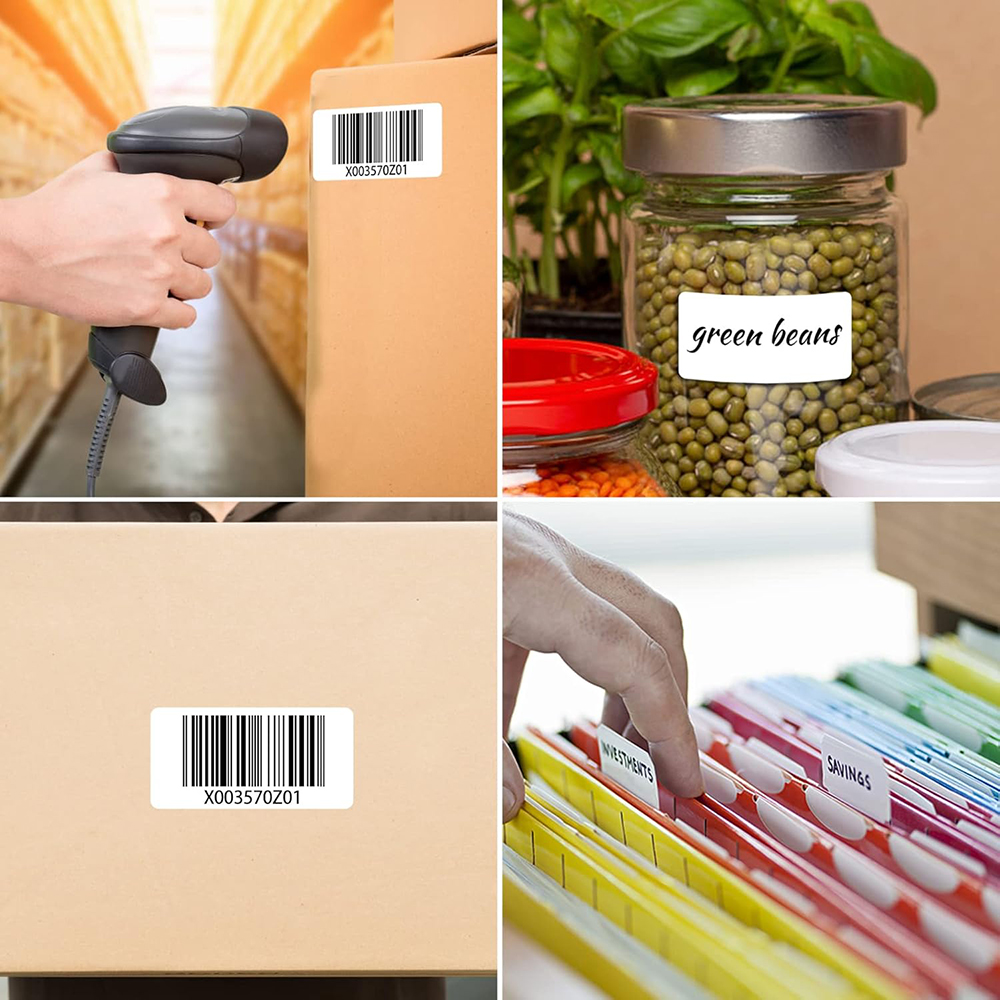
Direct thermal labels produce images through a heat-sensitive coating and do not require ribbons. Their simple printing process, high efficiency, and relatively low operating cost make them particularly suitable for applications with shorter information-retention periods, including:
- Express delivery and e-commerce shipping labels;
- Supermarket weighing labels;
- Fresh-food price labels;
- Takeaway and food-packaging labels;
- Short-term warehouse and circulation labels.
These applications typically involve high printing volumes, frequent information updates, and relatively short label lifecycles, making direct thermal technology a practical solution.
By comparison, thermal transfer labels use ribbons to transfer images onto the label surface. They generally provide better resistance to abrasion, chemicals, and long-term environmental exposure, making them more suitable for electronic component tracking, medical sample identification, industrial asset management, warehouse rack labels, and outdoor equipment identification.
Direct thermal and thermal transfer labels should not be viewed as competing technologies. Instead, they complement each other according to required service life, operating environment, and durability expectations. Large organizations frequently purchase both types and assign them to different logistics, retail, manufacturing, and asset-management processes.
Labels Are Becoming Data Entry Points for Enterprise Systems
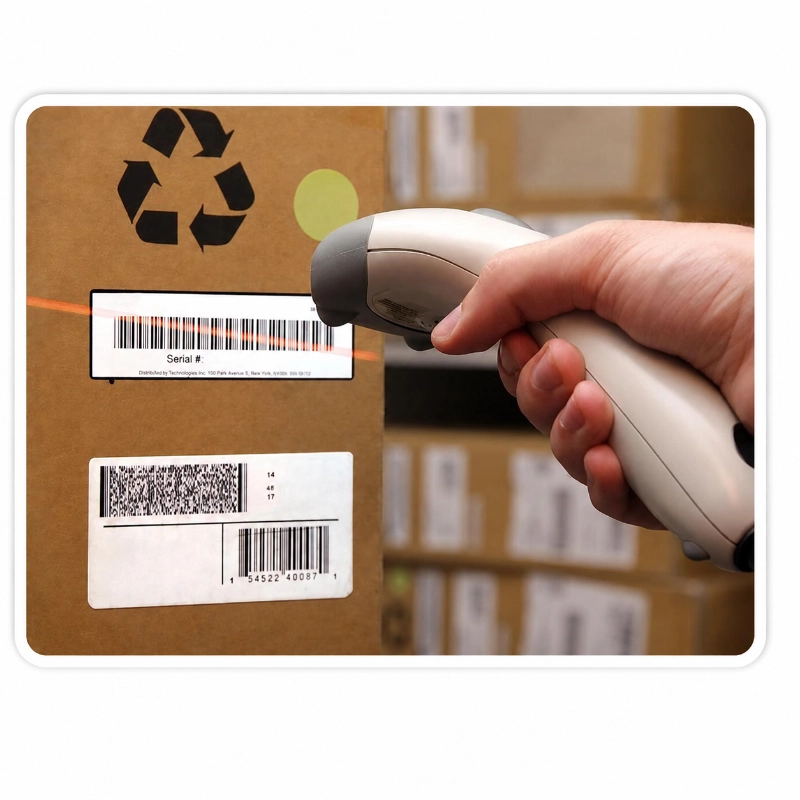
With the growing adoption of IoT, automatic identification, and digital warehouse management, labels and computer forms are becoming physical data entry points for ERP, WMS, TMS, and asset-management systems. Barcodes, batch numbers, serial numbers, and logistics codes must remain clear and readable, as blurred, detached, curled, or damaged labels can reduce scanning accuracy, disrupt tracking, and increase manual verification.
As a result, label purchasing is increasingly focused on the compatibility between face material, adhesive, printing technology, and application environment.Mufeng Paper provides customizable 1- to 6-part computer forms, with face paper available in virgin wood-pulp paper or recycled paper depending on application requirements. Different ply colors, dimensions, and form structures can also be configured for specific business workflows.
For label products, both direct thermal and thermal transfer labels can be matched with materials for different operating environments, including:
- Adhesives: standard-temperature, low-temperature, and high-temperature adhesives;
- Face materials: coated paper, synthetic paper, PET, and other options;
- Applications: ambient warehousing, cold-chain logistics, oily environments, high-temperature conditions, and durable identification.
From continuous computer forms to direct thermal and thermal transfer labels, Mufeng Paper offers a broader range of office and logistics consumables in multiple specifications. For companies managing multiple operating scenarios, consolidating purchasing with fewer suppliers can simplify procurement while reducing hidden management costs related to specification coordination, quality control, and repeated supplier communication.
Share on Social:


Contact Us
In This Article
Related Posts
Complete Guide to Thermal Paper – From Principle to Selection, Everything You Need to Know
Jul 27, 2026
Direct Thermal vs. Thermal Transfer Labels – How to Choose? A Quick Comparison
Jul 27, 2026
Carbonless Paper User Guide – What to Do When Copies Are Faint or Jams Occur?
Jul 27, 2026
Thermal Paper and Carbonless Paper — The “Invisible Essentials” of Office Applications Are Evolving
Jul 27, 2026